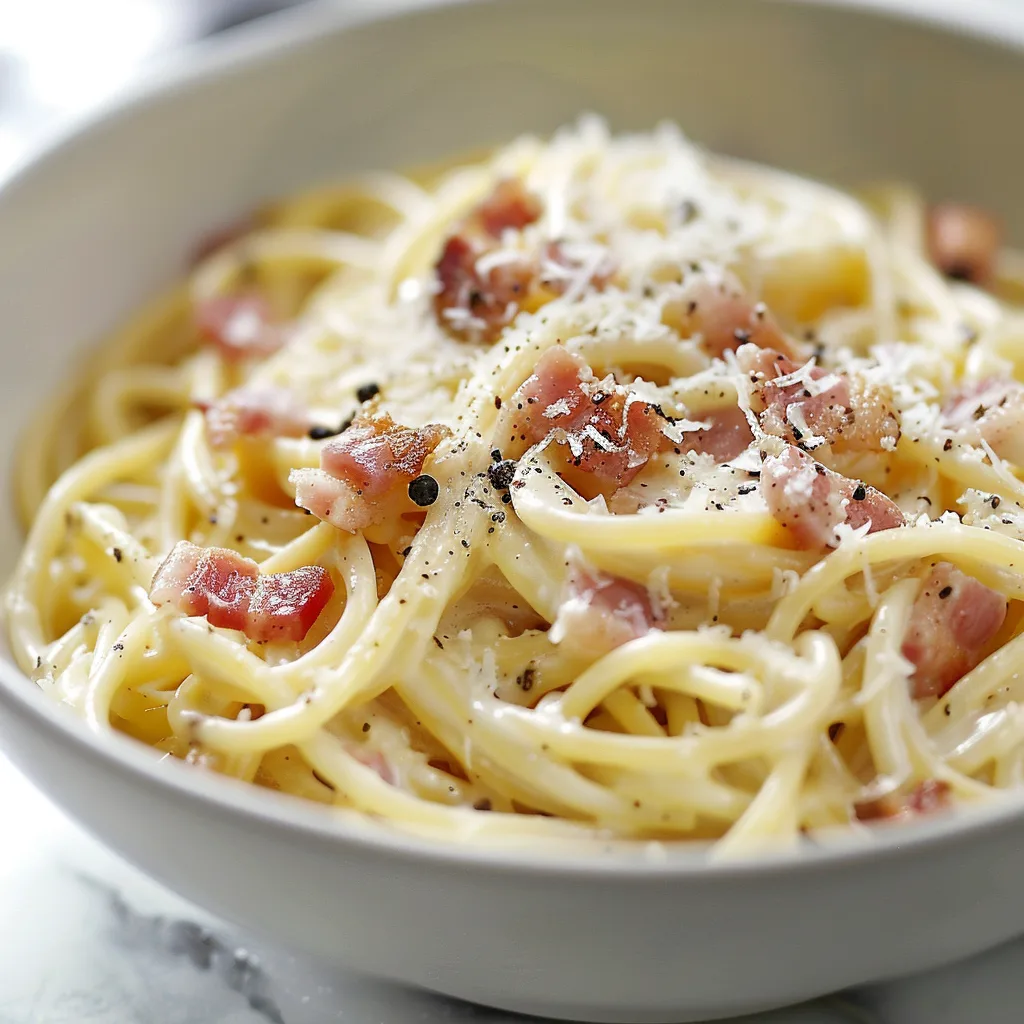
There is a reason spaghetti carbonara has stayed at the top of every Italian dinner list for decades. It takes five ingredients, one pan and about 25 minutes, yet it tastes like something from a small trattoria in Rome. No cream, no shortcuts — just eggs, cheese, cured pork and pasta water whisked into a silky sauce that clings to every strand.
Why This Spaghetti Carbonara Works
The magic of carbonara is not cream — it is emulsion. Hot pasta water, starchy and salty, loosens the egg and Pecorino mixture into a glossy sauce that coats the spaghetti without cooking the eggs. The golden rule is temperature control: the pan must be warm enough to melt the cheese but never so hot that the eggs turn into scrambled egg.
Ingredients for Spaghetti Carbonara
For the pasta
- 12 oz (340 g) spaghetti
- 1 tablespoon fine sea salt, for the pasta water
- 4 oz (115 g) pancetta or guanciale, diced small
- 2 garlic cloves, lightly crushed (optional, for flavouring the fat)
For the sauce
- 3 large eggs, at room temperature, plus 1 extra egg yolk
- 1 cup (about 3 oz / 85 g) finely grated Pecorino Romano, plus extra to serve
- 1 teaspoon coarsely ground black pepper, plus extra to serve
- 1/2 cup (120 ml) reserved pasta water, as needed
Method: How to Make Classic Spaghetti Carbonara
- Cook the spaghetti. Bring a large pot of water to a rolling boil, add the salt, and cook the spaghetti until just shy of al dente, about 1 minute less than the packet time. Before draining, scoop out 2 cups (480 ml) of the starchy pasta water and set it aside.
- Crisp the pancetta. While the pasta cooks, warm a large, deep frying pan over medium heat. Add the pancetta and cook for 6 to 8 minutes until golden and crisp at the edges. Add the garlic for the last minute, then lift it out and discard it. Take the pan off the heat.
- Whisk the sauce. In a medium bowl, whisk the eggs and yolk with the grated Pecorino and the black pepper until smooth and thick. It should look like a pale, spreadable paste.
- Combine off the heat. Tip the drained spaghetti into the pan with the pancetta and toss well. Wait 1 minute so the pan cools slightly, then pour in the egg mixture, tossing constantly. Add splashes of the reserved pasta water until the sauce turns glossy and coats each strand. The residual heat finishes the sauce — never put the pan back on the burner, or the eggs will scramble.
- Serve straight away. Divide between warm bowls, shower with extra Pecorino and black pepper, and serve immediately while the sauce is at its silkiest.
Tips and Variations
Room-temperature eggs matter. Cold eggs cool the pasta too fast and the sauce can turn grainy, so take them out of the fridge 20 minutes before you start.
Reserve more pasta water than you think you need. The sauce tightens as it sits, and a splash of hot pasta water brings it straight back to glossy.
Try guanciale if you can find it. It is the traditional cured pork cheek for carbonara and gives a richer flavour than pancetta, though pancetta is a perfectly good everyday swap. A handful of peas stirred through at the end is not traditional, but it is a popular family-friendly twist.
Storage
Carbonara is best eaten fresh, straight from the pan. If you do have leftovers, store them in an airtight container in the fridge for up to 2 days and reheat very gently in a pan over low heat with a splash of water, stirring constantly. Avoid the microwave, which overheats the egg sauce.
More recipes on Taste Daily USA
- Creamy Tuscan Salmon Recipe: Easy One-Pan Dinner
- Classic Turkey Tetrazzini Recipe: Creamy Leftover Turkey Pasta
- Slow Cooker Beef Stew Recipe: Hearty Winter Dinner
Tags: #SpaghettiCarbonara #ItalianRecipes #PastaNight #WeeknightDinners #ComfortFood #Recipes #DinnerIdeas #EasyDinner
Comments
Post a Comment