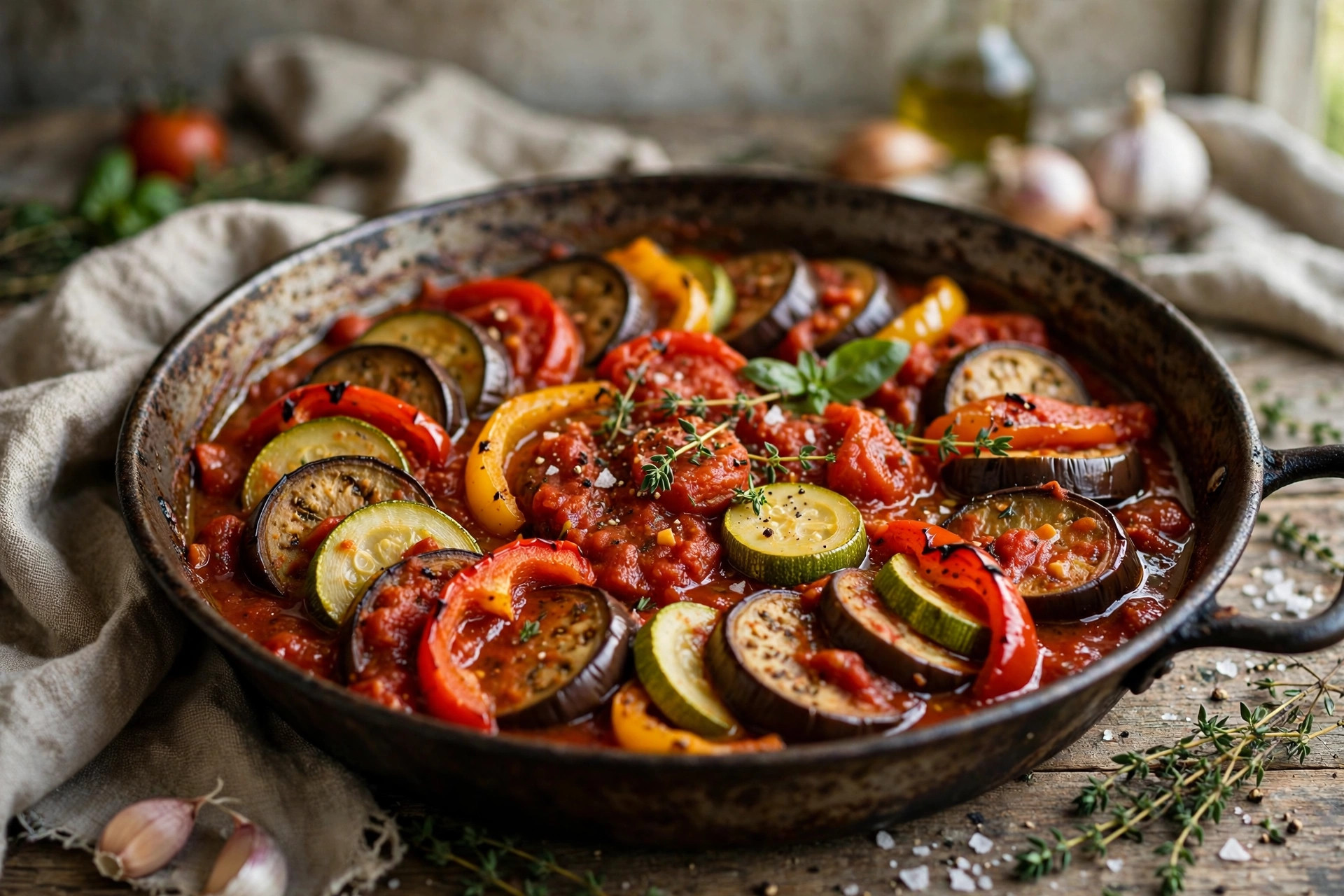
Some dishes taste like sunshine, and this classic ratatouille is one of them. Born in Provence, in the south of France, it turns a handful of humble summer vegetables into a rich, fragrant stew that works as a light main, a hearty side, or a topping for crusty bread. Aubergine, courgette, peppers and tomatoes simmer together in olive oil with garlic and herbs until everything is silky and sweet. It is naturally vegetarian, endlessly adaptable, and it tastes even better the next day.
Why This Classic Ratatouille Recipe Works
The secret is cooking the vegetables in stages rather than throwing them all in at once. Aubergine needs time to turn creamy, courgette cooks quickly and can turn soggy, and peppers bring sweetness only when they soften properly. Sautéing each vegetable separately builds layers of flavour, and finishing them together in a rich tomato sauce lets the flavours marry without anything turning to mush. A good glug of olive oil, plenty of garlic and a bouquet of Provençal herbs do the rest. Use ripe, in-season vegetables whenever you can — ratatouille is only as good as what goes into the pan.
Ingredients for Classic Ratatouille
This recipe serves 4 as a main or 6 as a side.
- 1 large aubergine (about 1 lb / 450 g), cut into 1-inch (2.5 cm) cubes
- 2 medium courgettes, halved lengthways and sliced
- 1 red pepper and 1 yellow pepper, deseeded and chopped
- 1 large onion, finely chopped
- 4 garlic cloves, thinly sliced
- 1 lb (450 g) ripe tomatoes, chopped, or 1 can (14 oz / 400 g) chopped tomatoes
- 6 tablespoons (90 ml) olive oil, plus extra to serve
- 1 tablespoon tomato paste
- 1 teaspoon dried herbes de Provence or a mix of thyme, rosemary and oregano
- 1 bay leaf
- 1 teaspoon sugar (optional, to balance the tomatoes)
- Salt and freshly ground black pepper
- A handful of fresh basil leaves, torn, to serve
Method: How to Make Ratatouille
1. Salt and brown the aubergine
Toss the aubergine cubes with a good pinch of salt and leave for 15 minutes, then pat dry. Heat 2 tablespoons of olive oil in a large, heavy pan over medium-high heat and brown the aubergine in batches until golden on all sides, about 6 to 8 minutes. Set aside.
2. Soften the peppers and courgettes
Add another tablespoon of oil to the pan and cook the peppers for 5 minutes until softened at the edges. Remove and set aside. Add a little more oil and cook the courgettes for 4 to 5 minutes until lightly golden. Set aside with the peppers.
3. Build the tomato base
Lower the heat, add the remaining oil and cook the onion gently for 8 minutes until soft and sweet. Stir in the garlic, tomato paste and herbes de Provence and cook for 1 minute. Add the tomatoes, bay leaf and sugar, season well, and simmer for 10 minutes until the sauce thickens slightly.
4. Bring it all together
Return the aubergine, peppers and courgettes to the pan. Stir gently, cover, and simmer over low heat for 25 to 30 minutes until everything is tender and the sauce is rich. Taste and adjust the seasoning. Remove the bay leaf, scatter over the torn basil, and finish with a drizzle of good olive oil.
Tips and Variations
Make it ahead: ratatouille improves overnight in the fridge, so it is a brilliant make-ahead dish — reheat gently and add fresh basil just before serving. Serve it your way: spoon it over creamy polenta, toss with pasta, pile it on toasted sourdough with a fried egg, or serve alongside grilled chicken or fish. Add protein: stir in a can of chickpeas or white beans for a heartier vegetarian main. Try the layered version: for a show-stopping presentation, arrange thinly sliced vegetables in concentric circles over the tomato base and bake at 375°F (190°C) for 40 minutes. Leftovers keep in the fridge for up to 4 days and freeze well for 3 months.
Storage Note
Cool the ratatouille completely before storing. Keep it in an airtight container in the fridge for up to 4 days, or freeze in portions for up to 3 months. Reheat gently on the hob with a splash of water or olive oil to loosen the sauce.
More recipes on Taste Daily USA
- Classic Vegetable Beef Soup Recipe: Hearty Homemade Dinner
- Maple Roasted Sweet Potatoes Recipe: Candied Pecan Side
- Roasted Garlic Mashed Potatoes Recipe: Creamy Holiday Side
Tags: #Ratatouille #FrenchRecipes #VegetarianDinner #HealthyRecipes #SummerVegetables #OnePotMeals #ComfortFood #TasteDailyUSA
Comments
Post a Comment